DAIRY-FREE GELATO
The broth beneath Japanese cooking
What dashi is
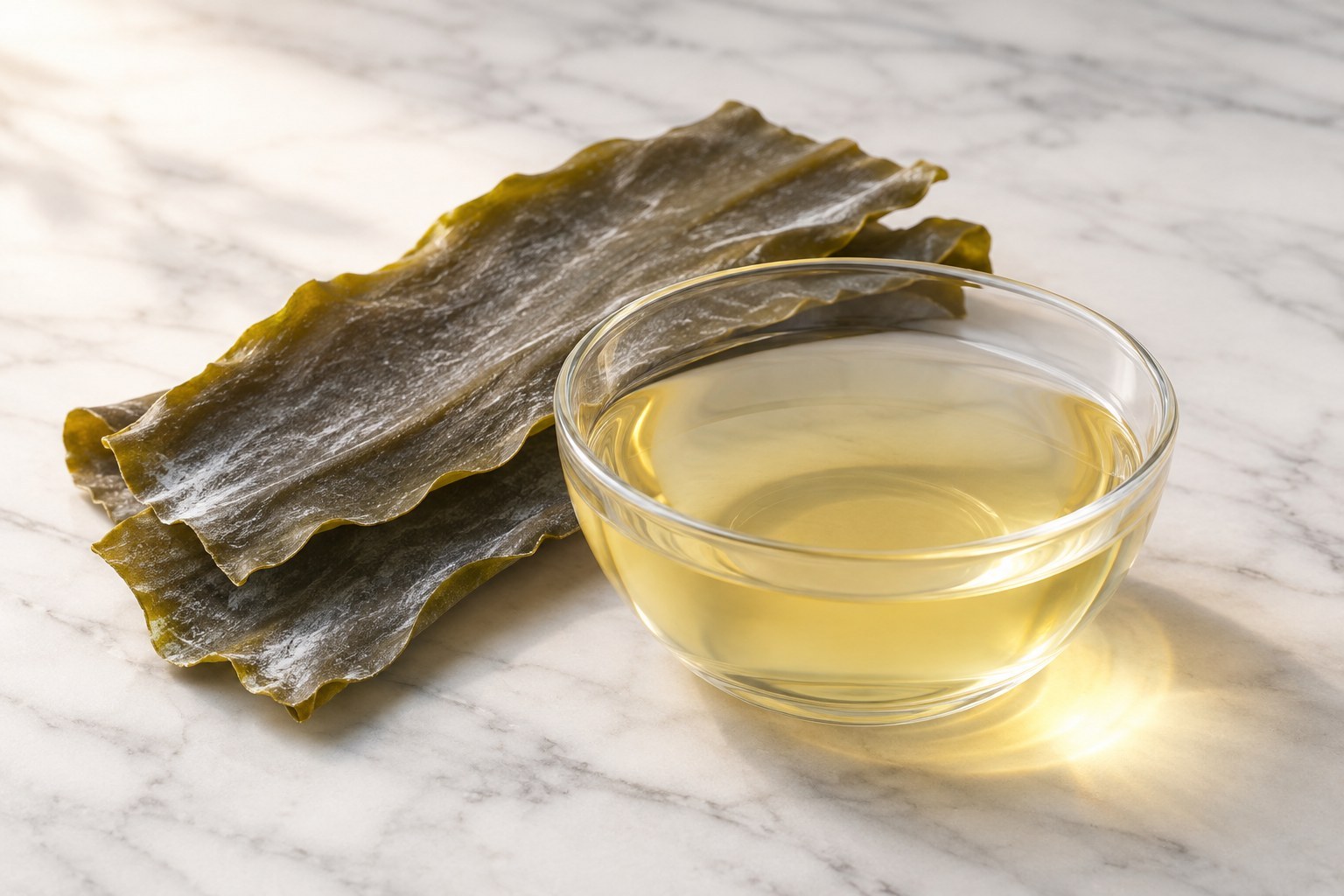
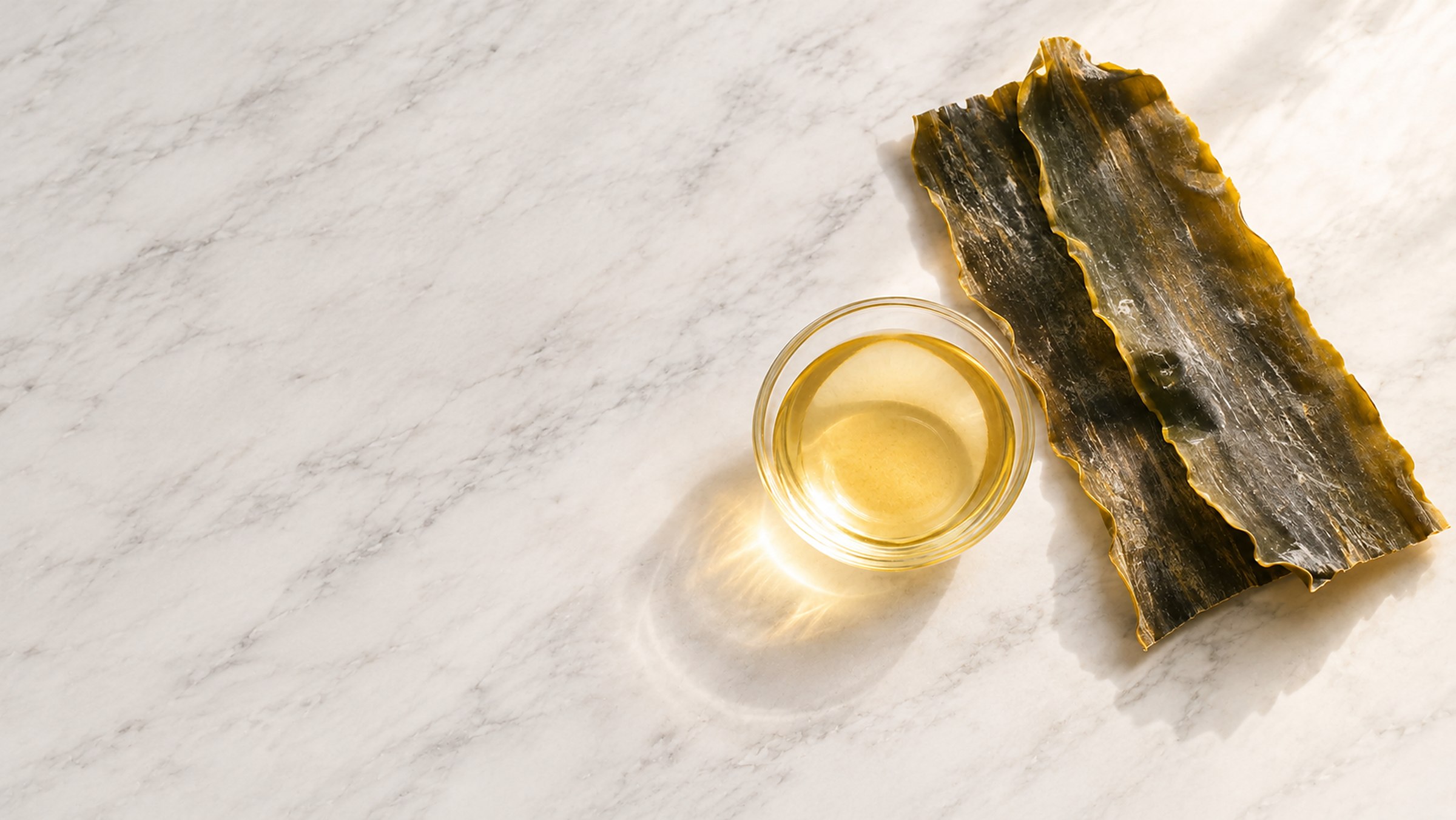
Dashi is made by drawing the umami compounds in kombu kelp, dried bonito, dried sardines and dried shiitake out into water. In Japanese cuisine it has long stood at the beginning of almost every dish, as the base of soups and simmered dishes.
What dashi takes on is the depth of richness in a dish. It widens the character of each ingredient, connects one taste to another and settles how they layer. Rather than standing out as a defined taste the way sweetness or saltiness does, it builds the body of the flavor itself.
The compounds behind umami
The depth of richness in dashi comes from its umami compounds. Each ingredient holds a different one, and each gives its richness in a different way.
KOMBU
Glutamic acid. A gentle, rounded umami that becomes the base when layered with other ingredients.
KATSUOBUSHI
Inosinic acid. The aroma rises, giving a dish a strong, clear outline.
SHIITAKE
Guanylic acid. A deep aroma and a concentrated umami particular to dried ingredients.
Following sweet, salty, sour and bitter, umami has become known around the world by its Japanese name. Dashi is the liquid in which those compounds are quietly gathered into water.
What dashi brings
Dishes made with dashi share a certain feel. No edges stand out, there is richness without heaviness, and what remains after eating is depth alone. It is a different kind of satisfaction from the one you reach by adding more.
This feel is what Dashizu looks for in dessert. We place the depth of kombu dashi beneath the sweetness, widen the outline of each ingredient and lengthen the finish. You need not think of dashi while eating; the difference stays with you once you have finished. That is the design we are after.